Dr. Shim Ching
How Dr. Ching Reduced Patient Acquisition Cost By 79%, And Built A Predictable Patient Acquisition System

THE SUMMARY
- Prove Meta as a viable patient acquisition channel
- Diversify lead sources
- Build a predictable patient acquisition system
- Previous agency was focused on generating leads & the practice was being inundated with low-quality enquiries, creating an operational nightmare without clear visibility into which marketing was actually producing patients
- Cost to acquire a customer down 79% ($5,952 → ~$1,238)
- Spend up 5x (~$2,000 → $12,000+/month)
- Predictable system with full patient-journey visibility
- With us for 2+ years
THE PX UPGRADE

APPLY FOR YOUR FREE 30 MINUTE PX FUNNEL PLAN STRATEGY SESSION

From being flooded with low-quality leads to building a system that consistently attracts, qualifies, nurtures and converts the right patients.
THE PROBLEM
When Dr. Ching came to PX, the problem wasn't simply that he needed more leads.
He had already experienced what many surgeons experience after hiring a traditional marketing agency:
More leads did not = more patients.
His previous agency was heavily focused on lead generation. The result was a high volume of enquiries coming into the practice without the systems needed to properly qualify, nurture, follow up and convert them.
Instead of creating predictable patient acquisition, the practice was being flooded with leads that created more work for the team.
And there was another problem.
The right data wasn't being tracked.
Lead volume could tell you how many people had raised their hand.
It couldn't tell you:
- Which campaigns were producing qualified patients
- Which leads actually became consultations
- Which consultations became patients
- What it cost to acquire a patient
- Where prospective patients were dropping out
- Which parts of the patient journey needed improvement
So the practice had a marketing problem — but underneath that was a system problem.
THE REAL QUESTION WASN'T:
"How do we get Dr. Ching more leads?"
It was:
"How do we build a predictable system that gets the right people into the practice and helps more of them move forward?"
HOW WE DID IT
We Didn't Build Another Lead Generation Campaign.
We Built The Heartbeat System™
The Heartbeat System™ is built around one principle:
A surgeon doesn't need more leads. They need a predictable flow of qualified patients.
So rather than treating advertising, landing pages, CRM, nurture and the practice's sales process as separate activities, we connected them into one patient acquisition journey.
For Dr. Ching, that meant five critical stages:
- Position the Practice
- Attract the Ideal Patient
- Build & Nurture the Pipeline
- Convert More Patients
- Optimise for Growth
Here's what that looked like in practice.
01. POSITION THE PRACTICE
.png)
.png)
.png)
Before spending more money on advertising, we first needed to understand why the right patient should choose Dr. Ching’s practice.
Because if a surgeon looks like every other surgeon in the market, advertising simply creates more people comparing them.
So the first stage was understanding:
⭐️ What makes the practice different?
⭐️ Who is the ideal patient?
⭐️ Why should that patient choose Dr. Ching over another surgeon?
Those answers then informed the messaging, offer and patient journey we built around the campaign.
The goal wasn't simply to put Dr. Ching in front of more people.
It was to make sure the right people understood why he was relevant to them.
02. ATTRACT THE RIGHT PATIENT
We Weren't Trying To Generate The Cheapest Lead.
We Were Trying To Attract The Right Patient.
.png)
Meta Ads were one part of the system — but the objective wasn't to maximise clicks or form submissions.
It was to attract people who were genuinely aligned with Dr. Ching's practice.
We developed advertising around the language, problems, desires and motivations of the target patient.
These are what we call Dog Whistle Ads — messaging designed so that the right person sees it and immediately recognises that the message is for them.
Then we continuously tested the message, offer and creative to identify what consistently produced qualified consultations.
This is a fundamental difference between lead generation and patient acquisition.
A lead is someone who gives you their information.
A qualified patient is someone who has the potential to become valuable to the practice.
The system is designed around the second.
03. BUILD & NURTURE THE PIPELINE
The Landing Page Became A Digital Appointment Setter
One of the biggest differences in the system was what happened after someone clicked the ad.
Most agencies treat the landing page as somewhere to send traffic.
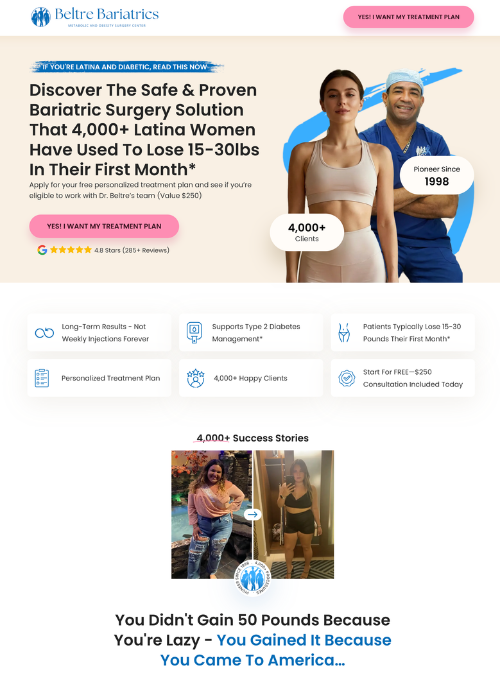
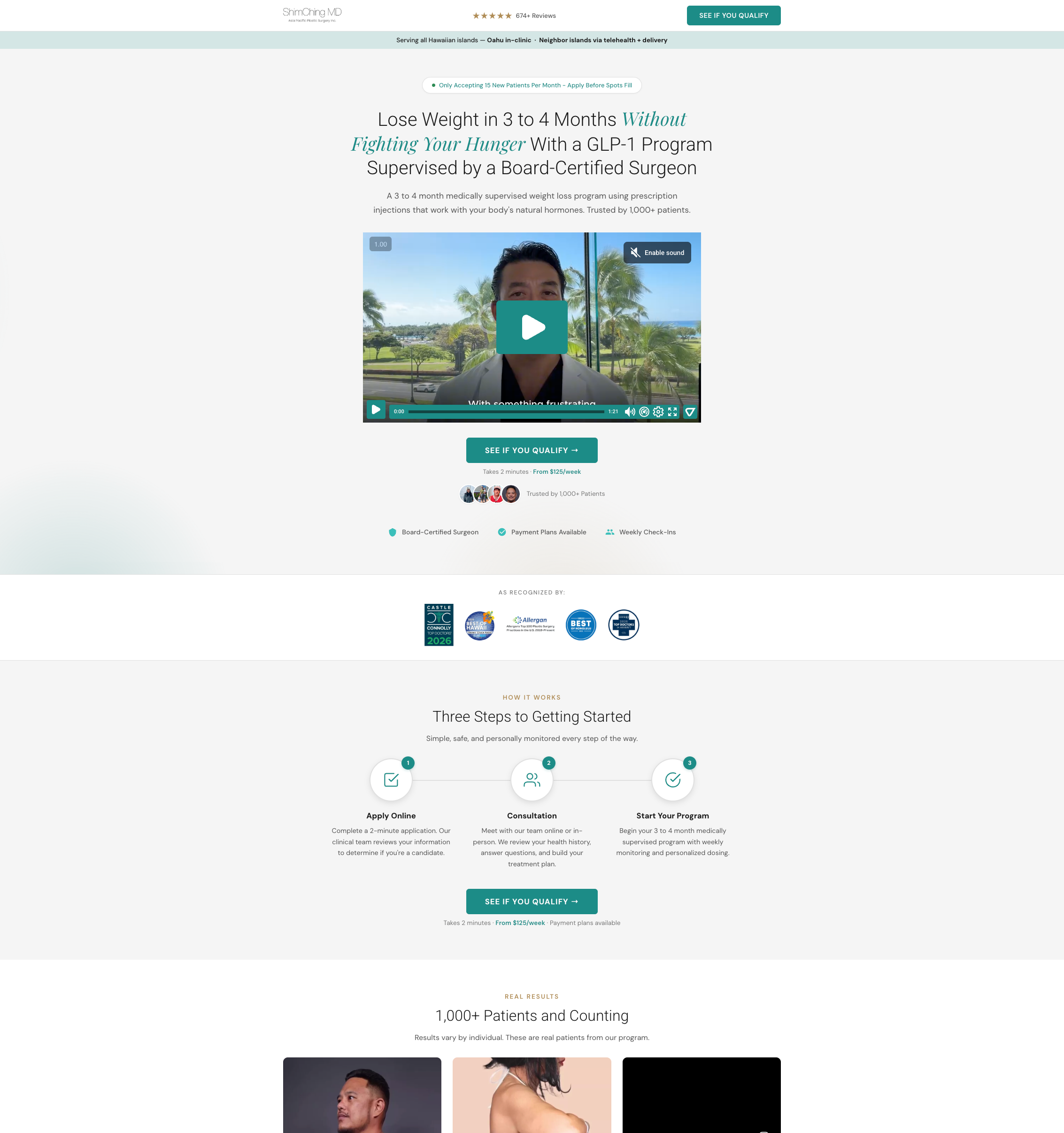
We treated Dr. Ching's landing page as the first member of the patient acquisition team.
Its job was to:
🧠 EDUCATE
Give prospective patients the information they needed to understand the practice, the approach and what made Dr. Ching different.
✅ QUALIFY
Help the right patients recognise that the practice was appropriate for them and move forward with confidence.
❌ DISQUALIFY
Make it clear who the practice wasn't right for — helping prevent poor-fit enquiries from reaching the team.
This meant the landing page wasn't simply designed to generate another form submission.
It was designed to do some of the work that would otherwise fall onto the practice team.
A FULL JOURNEY FROM CLICK TO CONSULTATION
The journey was deliberately structured:
BEFORE
Ads → Leads → Operational Chaos → Limited Visibility
AFTER
Ads → Education → Qualification → Booking → Nurture → Consultation → Patient → Data → Optimisation
.png)
The advertising attracted attention.
The landing page educated and filtered.
The qualification process identified intent.
The booking system converted that intent into a scheduled consultation.
And then Dr. Ching's team took over the consultation.
PX wasn't trying to replace the practice's team.
We were building the infrastructure that allowed the team to spend more of its time with the right patients.
WE DIDN'T STOP WHEN SOMEONE BECAME A LEAD
A major flaw in traditional lead generation is that the agency considers its job finished when someone fills out a form.
We don't.
Because a lead isn't a patient.
And someone who doesn't book immediately isn't necessarily a bad lead.
They may simply need more information, more confidence or more time.
So the system continued the conversation after the initial enquiry.
Depending on where someone was in the journey, the nurture system could use:
☑️ Email
☑️ SMS
☑️ Retargeting
☑️ Educational content
☑️ Doctor authority
☑️ FAQs
☑️ Objection handling
☑️ Case studies
The purpose wasn't to bombard people with messages.
It was to continue answering the questions that naturally arise between:
"I'm interested."
and
"I'm ready to have a consultation."
04. CONVERT MORE PATIENTS
Marketing And Sales Aren't Two Separate Systems.
They're two parts of the same patient journey.
Once a qualified patient booked a consultation, Dr. Ching's team handled the consultation.
But PX continued to support the process by training the team on how to work within the system, including scripts, follow-up and lead handling.
Because sending a qualified patient to a practice without preparing the team to handle them properly creates another leak in the system.
The objective was to create consistency between the experience a patient received:
Online
and
Inside the practice.
The patient shouldn't feel like they've moved from one disconnected system into another.
They should feel like they're continuing the same journey.
05. OPTIMISE FOR GROWTH
We Didn't Optimise For Leads.
We Optimised For Patients.
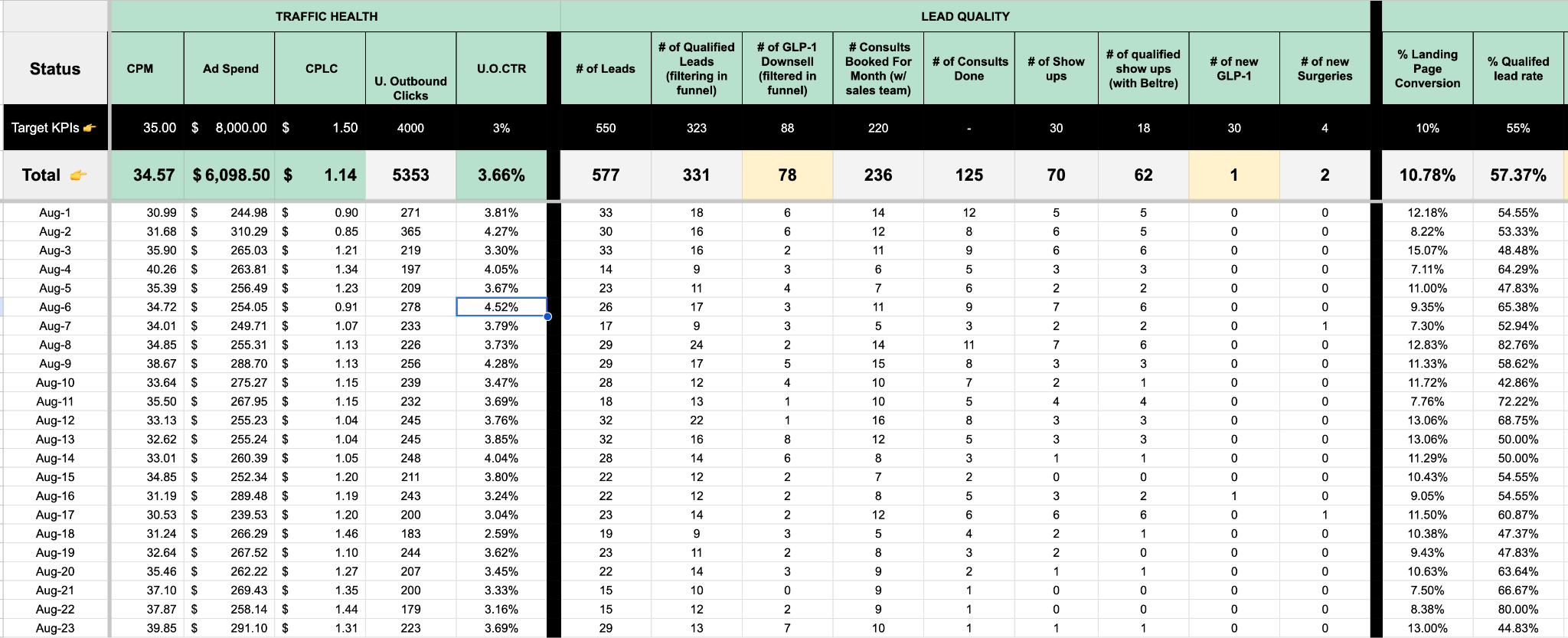
This is where the difference in tracking became critical.
Instead of looking only at lead volume, the system gave us visibility into what happened further down the funnel.
The data could then be used to answer questions like:
🔥 Which campaigns are producing qualified consultations?
🔥 Which patients are actually becoming patients?
🔥 Where are people dropping out?
🔥 What questions are coming up repeatedly?
🔥 Where is the practice losing confidence or momentum?
There are two types of information we use to answer those questions.
QUANTITATIVE DATA
The numbers tell us what is happening.
QUALITATIVE DATA
Patient and consultation feedback helps us understand why it is happening.
Then those insights become new hypotheses.
New messaging.
New creative.
New funnel improvements.
New nurture.
New tests.
And the system gets stronger over time.
That's how a campaign becomes a patient acquisition system.
THE RESULT
A 79% REDUCTION IN PATIENT ACQUISITION COST
The transformation wasn't simply an increase in leads.
The system produced a fundamental improvement in the economics of acquiring patients.
BEFORE
$5,952 = Patient Acquisition Cost
AFTER
$1,238 = Patient Acquisition Cost
RESULT
79% REDUCTION
At the same time, ad spend increased approximately 5X — demonstrating that the system wasn't dependent on simply spending less.
The practice had built a much more efficient mechanism for turning advertising investment into patient acquisition.
And the system continued producing a qualified patient pipeline for more than two years.
HERE'S WHAT DR. CHING HAD TO SAY ABOUT WORKING WITH PX
"Before working with PX, we hadn't been able to make Meta a predictable source of new patients. Since working together, we've significantly improved our patient acquisition cost while scaling our advertising investment, and we now have much better visibility into where our patients are coming from and how the entire funnel is performing.
The PX team has helped us with everything from advertising and creative to our landing pages, CRM, tracking, and sales process. We've been able to reduce our new patient acquisition cost by roughly 79% while scaling our monthly ad spend more than 5x, giving us a predictable & profitable system for acquiring new patients."
NEED SUPPORT SCALING YOUR MEDICAL PRACTICE?
Your Practice Doesn't Need More Leads.
It Needs A Better System For Turning The Right People Into Patients.
The Heartbeat System connects your positioning, advertising, qualification, booking, nurture, sales process and data into one patient acquisition journey.
So instead of asking:
"How many leads did we get?"
you can start asking:
"How many qualified patients did we acquire — and what did it cost us?"
QUESTIONS SURGEONS ASK US
How do you stop us from being flooded with bad leads?
We don't rely on one qualification point.
Qualification happens throughout the journey.
The advertising is designed to attract the right person.
The landing page educates and filters.
The qualification process adds another layer.
The booking process creates another commitment point.
The result is that we're not simply trying to generate as many leads as possible.
We're trying to generate the right opportunities.
What happens after someone becomes a lead?
They enter the patient acquisition journey.
Depending on their behaviour, that can include booking, confirmation, email, SMS, retargeting, educational content, follow-up and additional nurture.
The objective is to keep moving the right patient toward a consultation rather than treating the initial form submission as the end of the process.
What does the landing page actually do?
Think of it as a digital appointment setter.
It educates prospective patients, communicates the practice's positioning, answers important questions, qualifies intent and helps disqualify poor-fit prospects before they consume the team's time.
Does PX handle the consultation?
No.
Your team handles the consultation.
Our job is to build the system that gets the right patient to that consultation educated, qualified and prepared, and to help your team understand how to handle and follow up with those opportunities.
What does our team have to do?
Your team remains responsible for the parts of the patient journey that require human interaction — particularly the consultation and patient care.
PX builds and manages the acquisition infrastructure and trains the team on how to work within it, including scripts and follow-up processes.
The goal isn't to remove your team from the system. It's to make the system work with your team.
How do you know whether an ad is actually working?
We don't stop at cost per lead.
We want to understand what happens further down the funnel — from lead, to qualified opportunity, to consultation, to patient.
That allows us to make decisions based on the economics of patient acquisition rather than vanity metrics.
What happens to people who aren't ready to book?
They don't necessarily disappear.
The nurture system can continue educating and building confidence through email, SMS, retargeting, FAQs, educational content, case studies and objection handling.
The objective is to stay relevant until the patient is ready to take the next step.
What happens if someone doesn't show up?
The patient remains part of the system.
Follow-up and nurture can be used to recover opportunities that would otherwise be lost — rather than simply writing the lead off as a failure.
How does the system improve over time?
We use both quantitative and qualitative data.
The numbers tell us where the constraint is.
Patient and consultation feedback helps us understand why.
Then we turn those insights into new tests and improvements.
The system gets smarter as it gathers more information.
How is this different from what our previous agency was doing?
Most agencies are paid to generate leads.
PX is building a patient acquisition system.
That means we're not finished when someone fills out a form.
We're responsible for thinking about the journey that happens before, during and after that lead is generated — and how every part of the system contributes to acquiring a patient.
THE TAKEAWAY
Dr. Ching didn't need another agency to send more leads into his practice.
He needed a system that could:
🔥 Attract the right patients.
🔥 Filter out the wrong ones.
🔥 Educate and nurture the people in between.
🔥 Get qualified patients booked.
🔥 Equip his team to handle them.
🔥 Track what actually becomes a patient.
🔥 And continuously improve the economics of acquisition.
That's what we built.
And that's the difference between lead generation and patient acquisition.
WORK WITH THE PX TEAM TO BUILD YOUR PATIENT ACQUISITION SYSTEM.
See where patients are leaking from your current acquisition journey — and what we'd change to build a more predictable flow of qualified consultations.
APPLY FOR YOUR FREE 30-MINUTE PATIENT ACQUISITION SYSTEM DIAGNOSIS
No obligation. If we don't think we can help, we'll tell you.